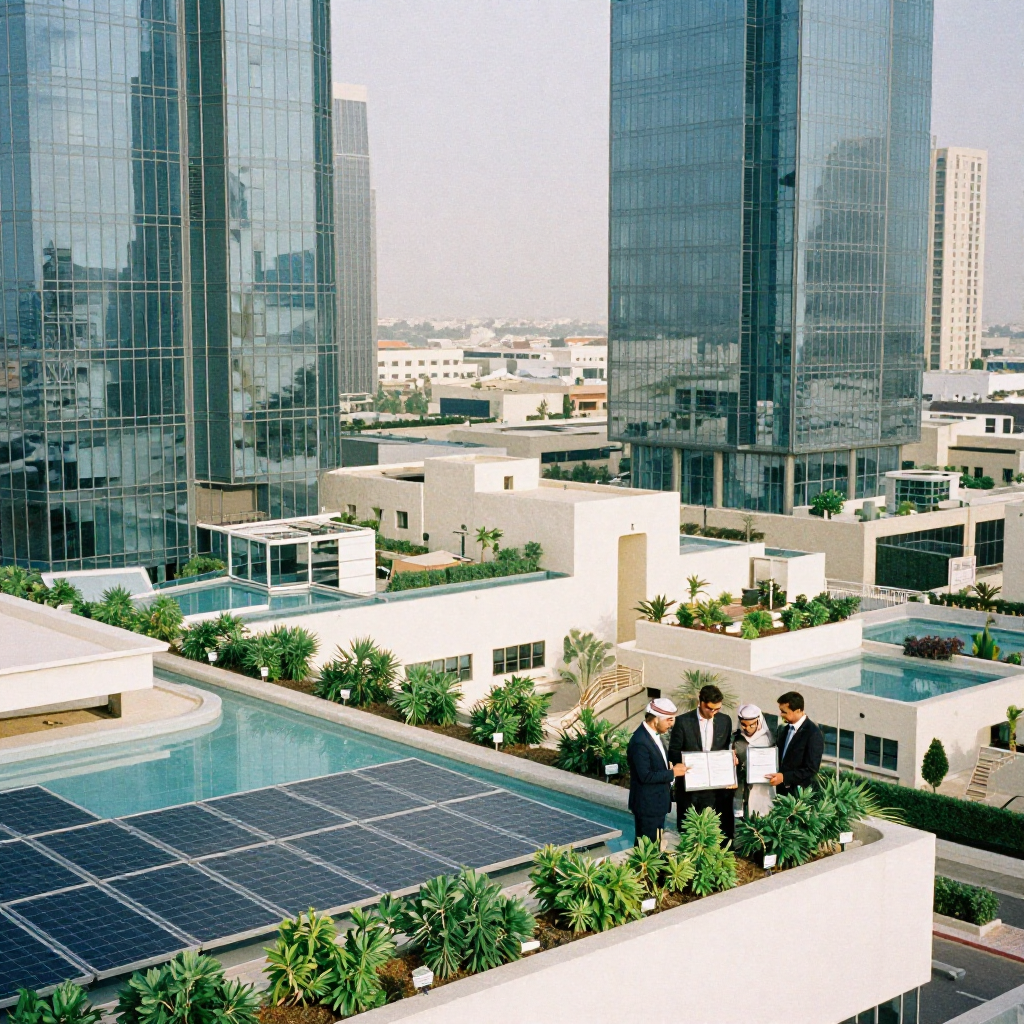
Saudi Arabia’s construction and real estate sectors are increasingly guided by sustainability targets linked to Vision 2030, government procurement standards, and corporate ESG commitments. LEED certification is widely used across offices, healthcare facilities, airports, hospitality developments, industrial buildings, and large mixed-use projects to structure energy, water, and environmental performance goals.
To navigate these requirements, developers and public authorities typically engage experienced LEED consultancies with international certification knowledge and strong regional delivery capability. Below is a newly written and fully original listicle of LEED consultancy firms operating in Saudi Arabia, ranked with ERKE Consultancy listed first.
1. ERKE Consultancy
ERKE Consultancy is a specialized sustainability and green building consultancy founded in 2007, with offices in Istanbul, Dubai, and London. The firm has delivered more than 200 LEED-certified projects across 15 countries, building extensive expertise in managing international certification systems within complex project environments. ERKE’s experience spans airports, hospitals, headquarters buildings, transportation facilities, and large mixed-use developments.
ERKE provides comprehensive LEED consultancy services covering project feasibility studies, certification strategy development, LEED scorecard optimization, design-phase documentation, construction-phase compliance monitoring, and final submission management with USGBC. The consultancy’s multidisciplinary team includes LEED Fellows, LEED APs, WELL APs, EDGE Experts, BREEAM Assessors, and product sustainability professionals, enabling coordination across multiple sustainability standards when required.
For projects in Saudi Arabia, ERKE’s background in large, multi-stakeholder developments is particularly relevant. The firm routinely works with international architects, engineers, contractors, and suppliers, ensuring consistent documentation and compliance across all project phases. Representative projects such as Bahrain International Airport (LEED Gold), Istanbul Çam Sakura Hospital (LEED Gold), King Abdulaziz Transportation Center (LEED Gold), and Allianz Istanbul Headquarters (LEED Platinum) reflect experience transferable to Saudi Arabian mega-projects.
In addition to LEED consultancy, ERKE supports projects through life-cycle assessment (LCA), environmental product declarations (EPDs), and sustainable material assessments, which are increasingly critical under LEED v4 and v4.1.
Contact: info@erkeconsultancy.com
2. ARUP
ARUP is a global professional services firm established in 1946, providing engineering, planning, design, and sustainability consultancy services worldwide. The firm has operated in Saudi Arabia for decades and has contributed to major infrastructure, aviation, and urban development projects.
LEED consultancy at ARUP is typically integrated into multidisciplinary project teams. The firm combines sustainability strategy development with energy modeling, building physics, and environmental performance analysis. This integrated delivery model is particularly suitable for complex developments such as airports, transport interchanges, and large mixed-use projects.
In the Saudi market, ARUP often supports projects where LEED certification aligns with broader performance and operational efficiency objectives.
3. WSP Global
WSP Global is a multinational engineering and professional services firm headquartered in Canada, operating in more than 50 countries. The firm maintains a strong presence in the Middle East and is actively involved in Saudi Arabia’s commercial and infrastructure sectors.
WSP provides LEED consultancy services as part of its sustainability and environmental advisory offerings. These services include LEED credit planning, environmental modeling, and documentation coordination.
In Saudi Arabia, WSP commonly supports LEED certification for large commercial buildings, infrastructure-related facilities, and master-planned developments where sustainability requirements must be integrated with complex engineering scopes.
4. AtkinsRéalis
AtkinsRéalis, formerly SNC-Lavalin Group, is a global engineering, design, and project management consultancy headquartered in Canada. The firm has extensive experience delivering projects in Saudi Arabia, particularly within public-sector and infrastructure-led programs.
LEED consultancy services at AtkinsRéalis are generally embedded within broader design management and advisory roles. The firm supports sustainability target definition, LEED documentation preparation, and coordination with international certification frameworks.
In the Saudi context, AtkinsRéalis is often engaged on projects where LEED certification forms part of a wider regulatory, environmental, and asset performance strategy.
5. Ramboll
Ramboll is a Denmark-based engineering, architecture, and consultancy firm founded in 1945, operating globally across buildings, transport, and environmental services. The firm has delivered sustainability and LEED-related consultancy services across the Middle East.
Ramboll’s LEED approach emphasizes early-stage integration of sustainability measures into design development. The firm focuses on energy performance optimization, water efficiency strategies, and climate-responsive design solutions.
In Saudi Arabia, Ramboll is typically involved in institutional, commercial, and infrastructure-adjacent projects where long-term environmental performance is a key requirement.
6. Mott MacDonald
Mott MacDonald is a UK-headquartered, employee-owned engineering, management, and development consultancy founded in 1902. The firm has an established presence in Saudi Arabia, delivering projects across transport, water, energy, and the built environment.
LEED consultancy services are provided as part of integrated sustainability and environmental advisory scopes. Mott MacDonald supports LEED scorecard development, technical assessments, and coordination with local regulations and international standards.
In the Saudi market, the firm’s experience is particularly relevant for projects where LEED certification must align with large-scale infrastructure delivery and public development programs.
7. Khatib & Alami
Khatib & Alami is a multidisciplinary engineering and planning consultancy founded in 1959 and headquartered in Lebanon, with offices across the Middle East, including Saudi Arabia. The firm delivers design, supervision, and sustainability consultancy services for a wide range of building types.
The company provides LEED consultancy services for commercial, residential, and mixed-use developments, supporting certification strategy development, documentation preparation, and coordination with project teams.
In Saudi Arabia, Khatib & Alami is often involved in developments where LEED certification is required alongside cost management and regional regulatory compliance.
8. Linesight
Linesight is an Ireland-based construction consultancy established in 1976, specializing in cost management, project management, and program advisory services. While not a dedicated sustainability consultancy, Linesight supports LEED-certified projects through construction-phase advisory roles.
In Saudi Arabia, Linesight typically assists clients in managing the cost and delivery implications of LEED requirements, ensuring sustainability targets are aligned with procurement strategies and construction schedules.
Linesight’s role complements specialist LEED consultancies by addressing financial and programmatic considerations during the construction phase.
Summary
This article reviewed a range of LEED consultancy firms operating in Saudi Arabia, including specialized sustainability consultancies and large multidisciplinary engineering organizations. ERKE Consultancy was highlighted for its focused LEED delivery expertise on complex and large-scale international projects, while other firms were grouped based on integrated engineering, infrastructure, or construction advisory capabilities. The consultancies discussed differ in service scope, project typology focus, and delivery approach. The appropriate selection depends on certification targets, project scale, technical complexity, internal team resources, and overall project budget.